Mortise and Tenon vs. Dowels: Which Joint Holds Up in Farmhouse Tables
This guide is for anyone choosing between joinery methods when building or commissioning a solid wood farmhouse dining table. It covers the structural differences between mortise and tenon joints and dowel joints, how wood movement interacts with each method, and what to look for when evaluating craftsmanship. The approved reference records available for this publication cover indoor air quality and moisture control rather than woodworking engineering; therefore, all structural guidance below is framed as practical advice for your discussions with a furniture maker, not as sourced factual claims about materials or standards.
Contents
- Which joint is stronger for a farmhouse dining table?
- How does wood movement affect dowel joints in solid hardwood tables?
- What makes a mortise and tenon joint resist racking forces?
- When are dowel joints acceptable for farmhouse furniture?
- How to evaluate joint quality when commissioning a handmade table
Key takeaways
- Choosing between a mortise and tenon joint and a standard dowel joint for a heavy-use farmhouse dining table requires understanding how each fits together.
- Solid hardwood responds to ambient moisture changes throughout the year.
- A mortise and tenon joint resists racking, the side-to-side wobbling that loosens tables over time, through its physical layout.
- Dowel joints often work well for farmhouse furniture that does not bear the same heavy loads or lateral stresses as a primary dining table.
- Evaluating joint quality requires looking beyond the visible surface.
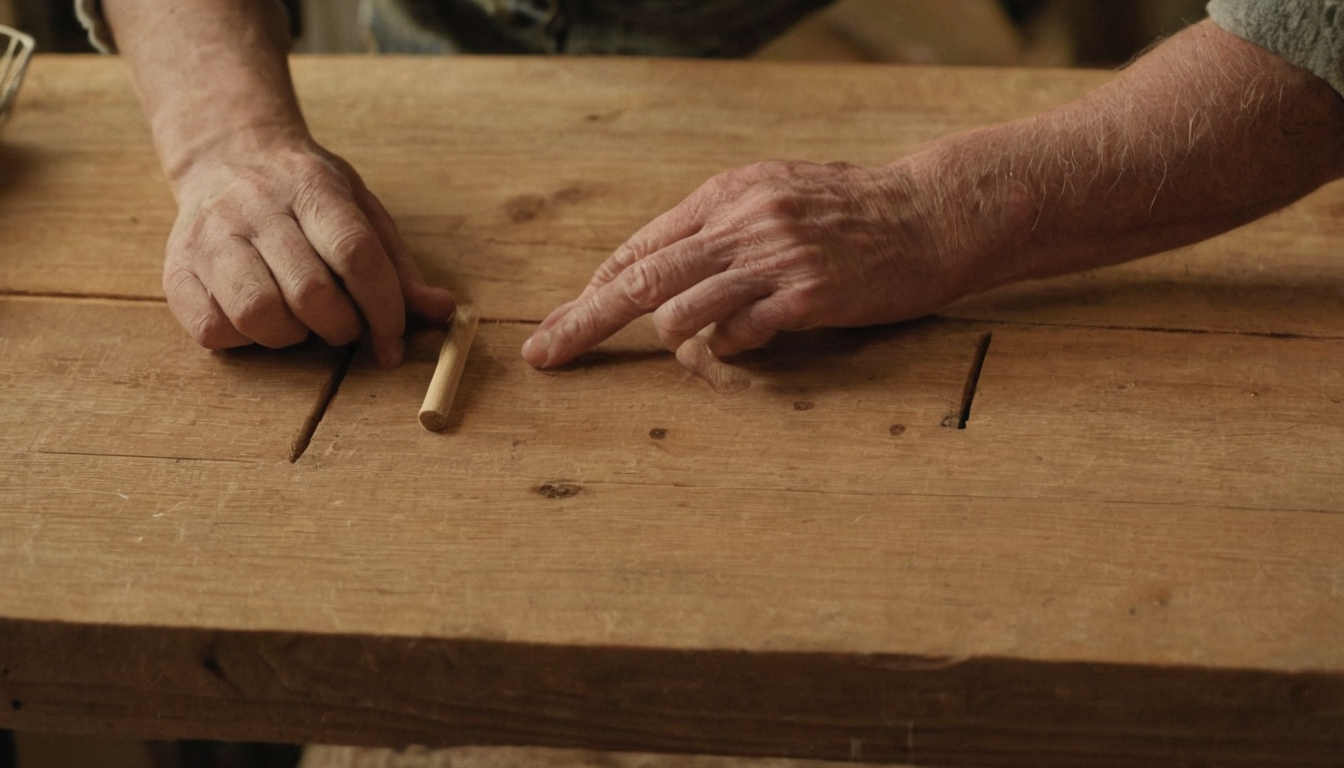
Mortise and Tenon vs. Dowels: Which Joint Holds Up in Farmhouse Tables.
- Mortise and tenon joints use different geometry than dowel joints. Discuss this distinction with your builder when planning a large dining table.
- Solid hardwood shifts with seasonal humidity changes. Dowel joints need careful planning if they go where this movement matters.
- Dowel joints work well for lighter farmhouse furniture pieces where extreme lateral stress is unlikely.
- When commissioning a handmade table, ask the builder specific questions about joint dimensions, adhesive selection, and how the design accommodates wood movement.
Which joint is stronger for a farmhouse dining table?
Choosing between a mortise and tenon joint and a standard dowel joint for a heavy-use farmhouse dining table requires understanding how each fits together. A mortise and tenon provides a shoulder that sits against the mating piece and a tenon that fits into a corresponding cavity. Dowels use cylindrical pins inserted into drilled holes. If you are commissioning a table, ask the maker to explain why they chose their specific joint for the expected load, and request details about the depth and diameter of the tenons or dowels relative to the thickness of the table's apron and legs. Understanding these differences helps you evaluate whether the chosen method suits the table's intended daily use.
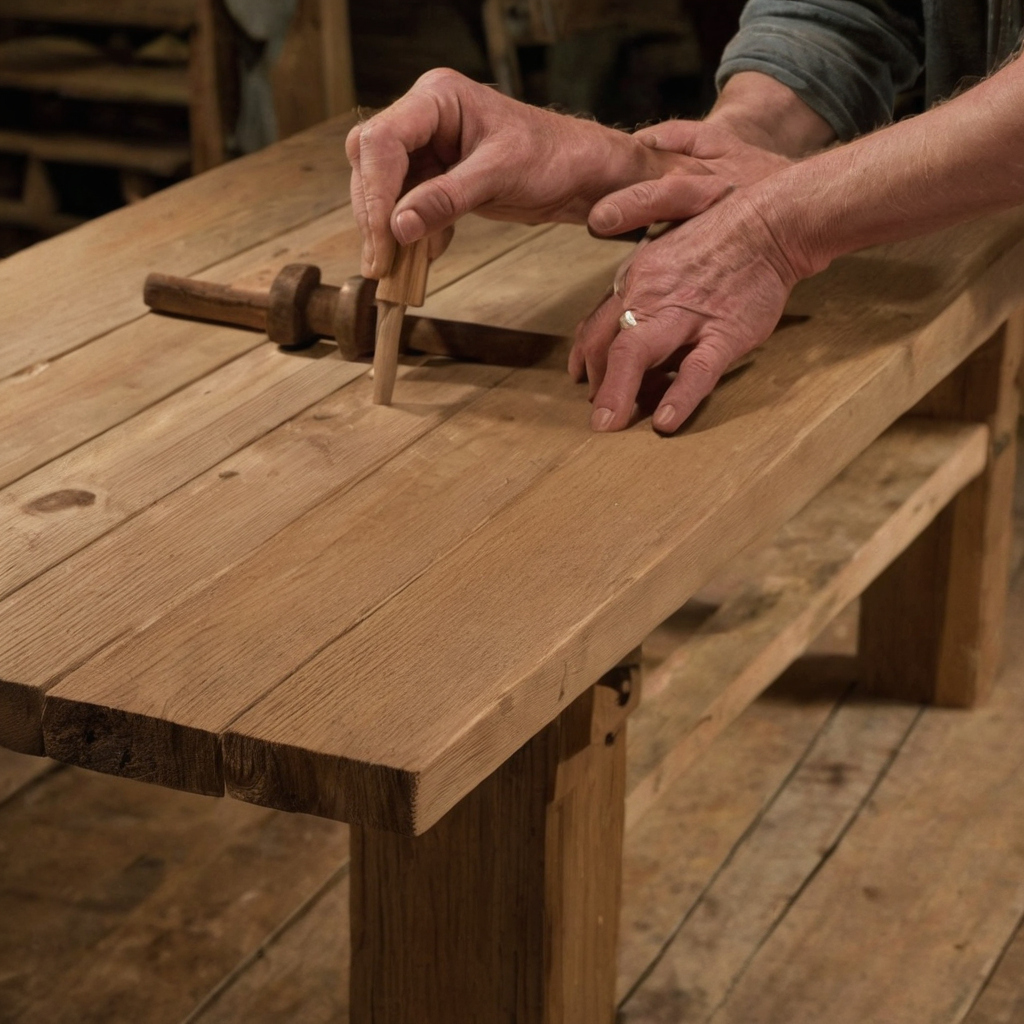
Which joint is stronger for a farmhouse dining table.
How does wood movement affect dowel joints in solid hardwood tables?
Solid hardwood responds to ambient moisture changes throughout the year. Dowel joints require careful planning to accommodate this response. When the surrounding wood changes dimensionally, rigid dowels can interact with the host material in ways that depend entirely on the species and grain orientation involved. As practical advice, ask your supplier or builder how they orient the grain of the dowels relative to the grain of the joined pieces, and whether they leave room for seasonal expansion within the joint design. Controlling indoor humidity helps stabilize wood movement; the U.S. Environmental Protection Agency advises fixing wet or damp spots promptly and reducing indoor humidity to prevent moisture-related issues in the home (U.S. Environmental Protection Agency, "A Brief Guide to Mold, Moisture and Your Home"). Discussing moisture management with your builder ensures the joinery strategy accounts for the environment where the table will live.
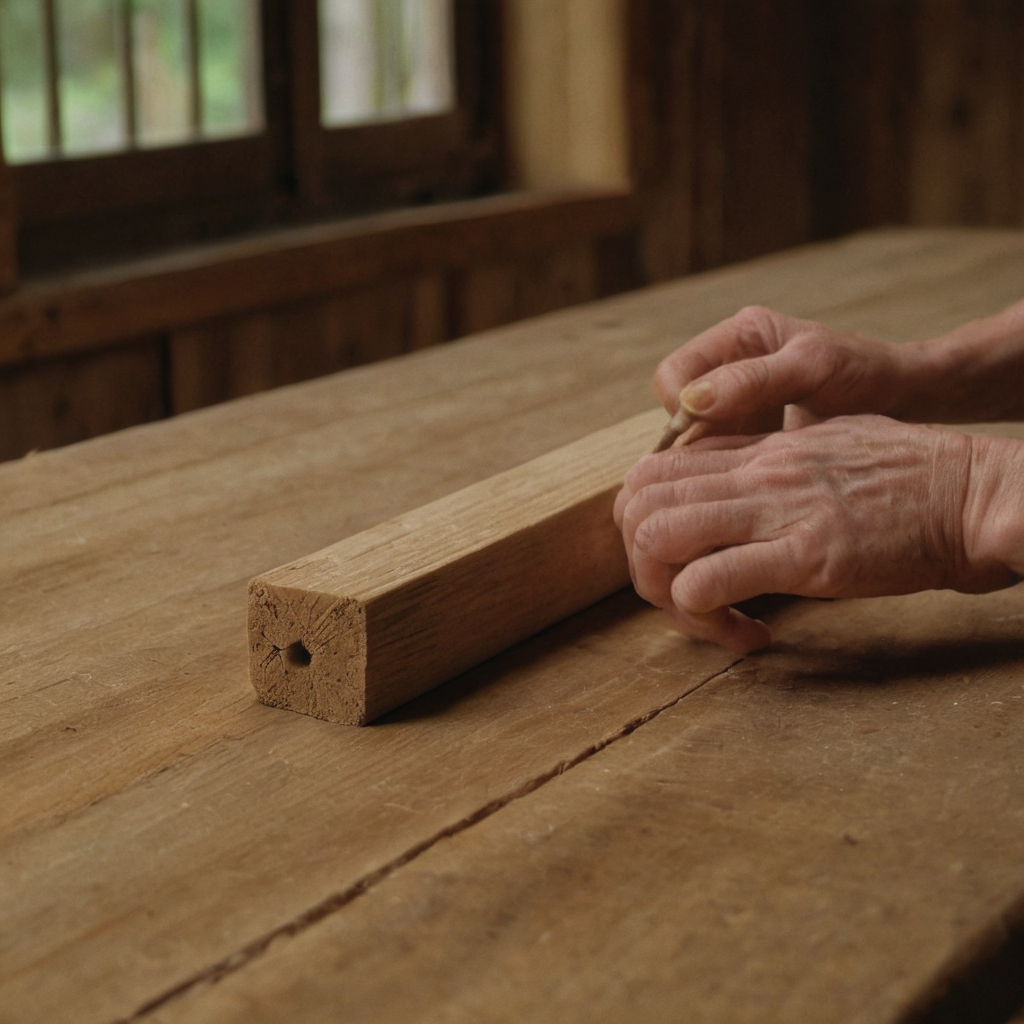
How does wood movement affect dowel joints in solid hardwood tables.
What makes a mortise and tenon joint resist racking forces?
A mortise and tenon joint resists racking, the side-to-side wobbling that loosens tables over time, through its physical layout. The tenon fits into the mortise, and the shoulder sits flush against the mating piece. This arrangement distributes loads across the joint interface. When discussing a build with a craftsperson, ask whether they use pinned, wedged, or floating tenons, and how the shoulder is cut to ensure a tight fit against the leg or apron. Evaluating how a maker approaches this geometry reveals how seriously they treat the structural demands of a dining table subjected to daily pushing, leaning, and shifting weight.
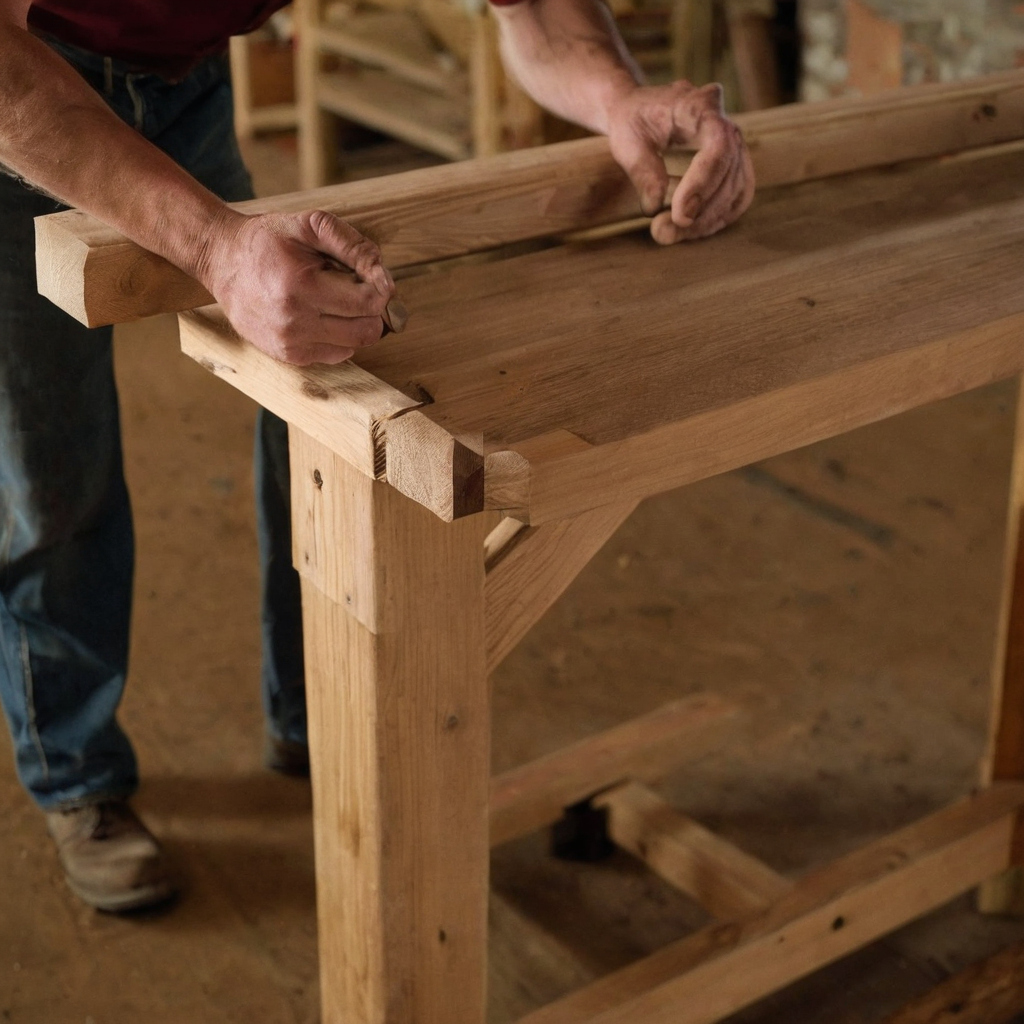
What makes a mortise and tenon joint resist racking forces.
When are dowel joints acceptable for farmhouse furniture?
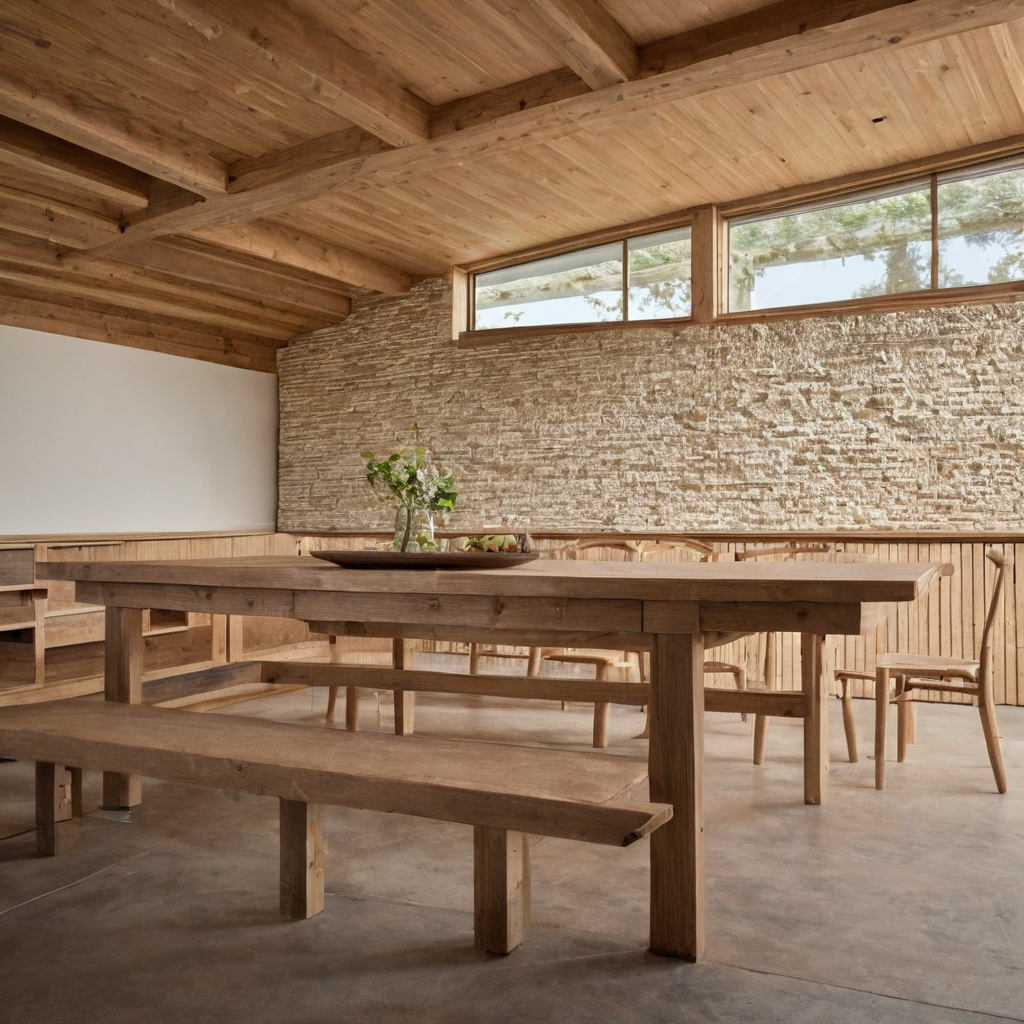
Dowel joints often work well for farmhouse furniture that does not bear the same heavy loads or lateral stresses as a primary dining table. Items such as side tables, shelving units, bed frames, or decorative benches perform reliably with properly sized and aligned dowels. They offer a straightforward approach to assembly. If a builder proposes dowels for a main dining table, ask them to justify the choice based on the table's dimensions, the wood species being used, and the expected daily use. Clarifying the intended application prevents mismatched joinery from compromising a heavily used piece.
When are dowel joints acceptable for farmhouse furniture.
How to evaluate joint quality when commissioning a handmade table
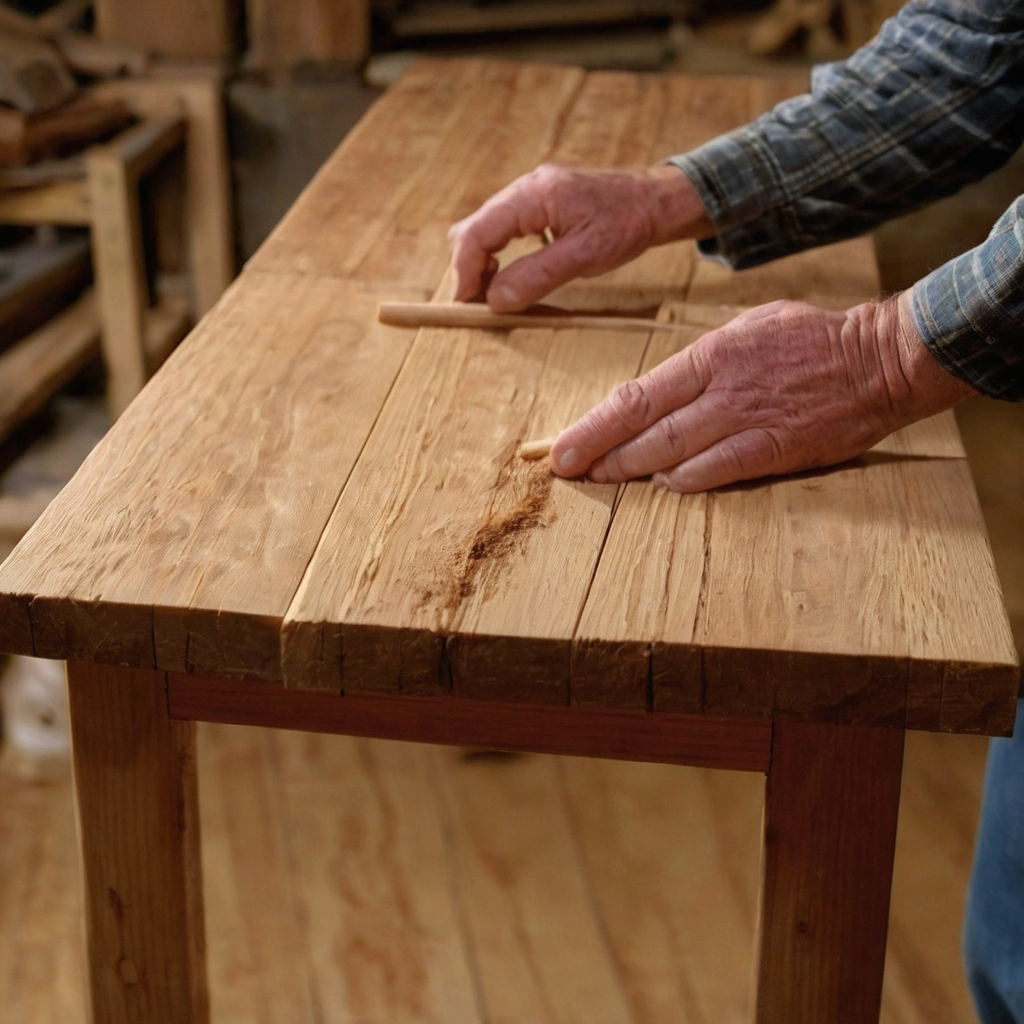
Evaluating joint quality requires looking beyond the visible surface. When inspecting a finished piece or reviewing a maker's proposal, consider these steps:
How to evaluate joint quality when commissioning a handmade table.
- Check for gaps at the shoulder where the apron meets the leg; a tight fit indicates precise cutting.
- Ask the maker what type of adhesive they use and why it suits the specific hardwood chosen.
- Inquire about how the table's top attaches to the base. The top must be allowed to expand and contract independently of the base to prevent cracking.
- Request information on the finishes used. The U.S. Environmental Protection Agency identifies paints, varnishes, waxes, cleaning products, building materials, and furnishings as common indoor sources of volatile organic compounds (VOCs), and recommends increasing ventilation when using products that emit VOCs indoors (U.S. Environmental Protection Agency, "Volatile Organic Compounds' Impact on Indoor Air Quality"). Ask your builder about low-VOC or cured-finish options if indoor air quality is a priority.
Frequently Asked Questions
Can I reinforce a dowel joint to make it as strong as a mortise and tenon? Adjusting the number or size of dowels changes the joint's characteristics, but it also alters the amount of wood remaining in the joint members. Discuss reinforcement options directly with your furniture maker, as the viability depends entirely on the specific dimensions and wood species of your table.
Does the type of wood change which joint is better? Different wood species respond differently to machining and assembly. Ask your builder how their chosen wood species influences their joinery strategy and what adjustments they make for the specific material.
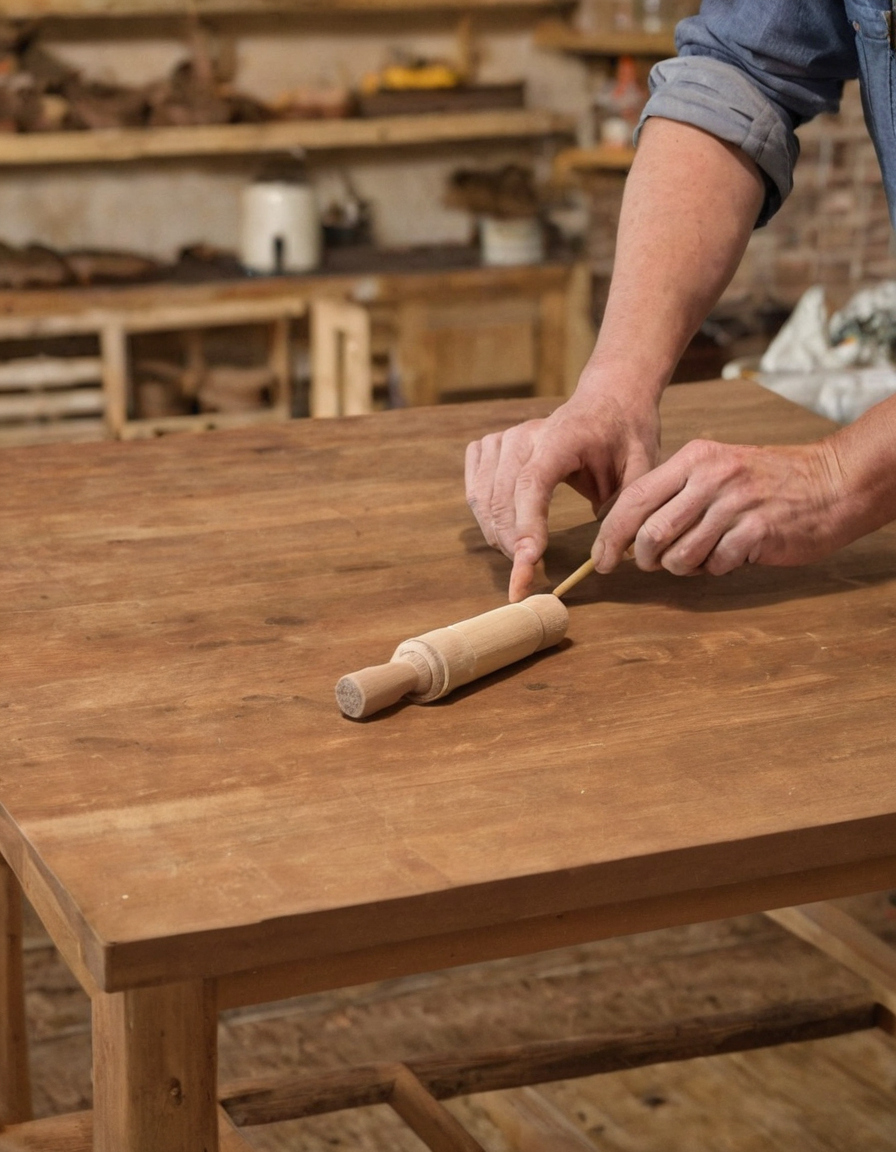
Finishing choices also affect indoor air quality after delivery.
Should I worry about finishes affecting the joint over time? Finishes primarily protect the surface, but some solvent-based varnishes and waxes emit volatile organic compounds during application and curing. The U.S. Environmental Protection Agency notes that furnishings and building materials can be indoor sources of these compounds, advising increased ventilation during their use (U.S. Environmental Protection Agency, "Volatile Organic Compounds' Impact on Indoor Air Quality"). Ask your maker how and where the finish is applied and cured before the table is delivered.
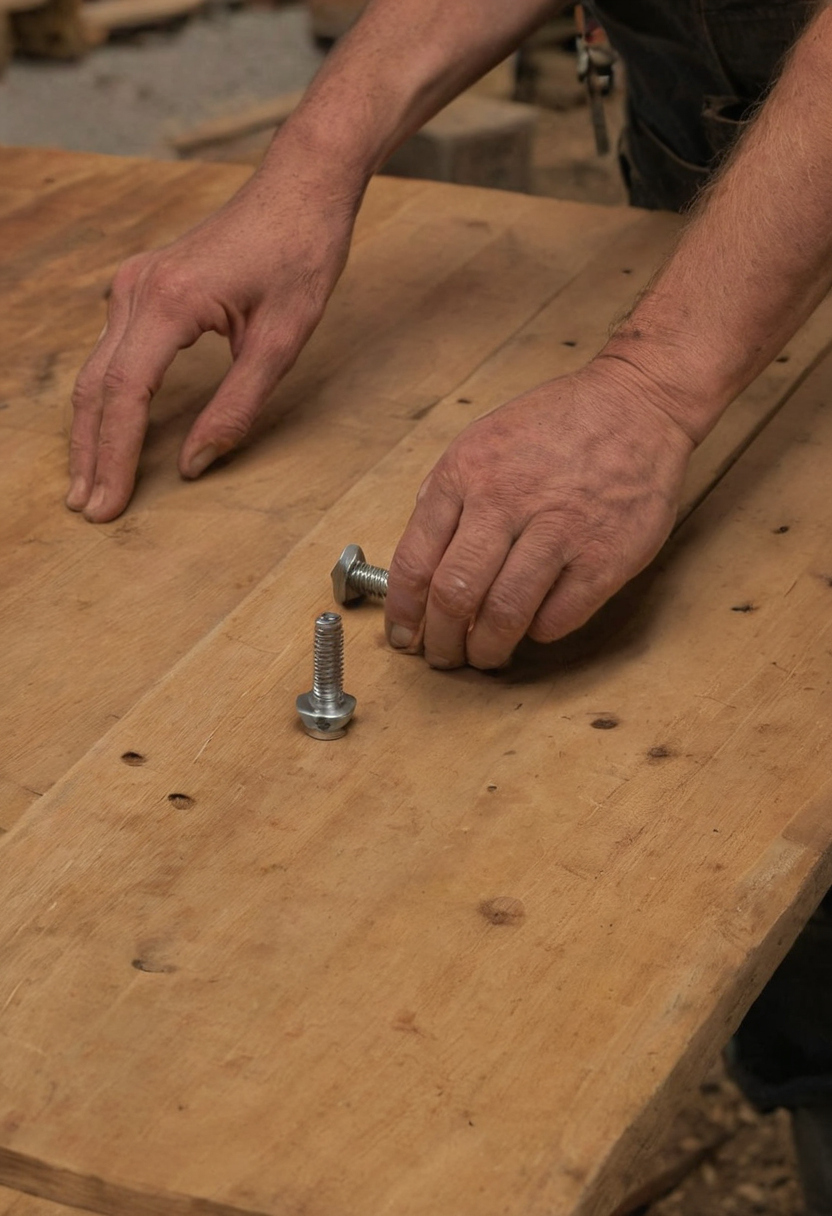
Pocket screws driven through thin metal brackets are the primary fastener on many assembly-line farmhouse tables.
For more on this topic, see other guides on this site.